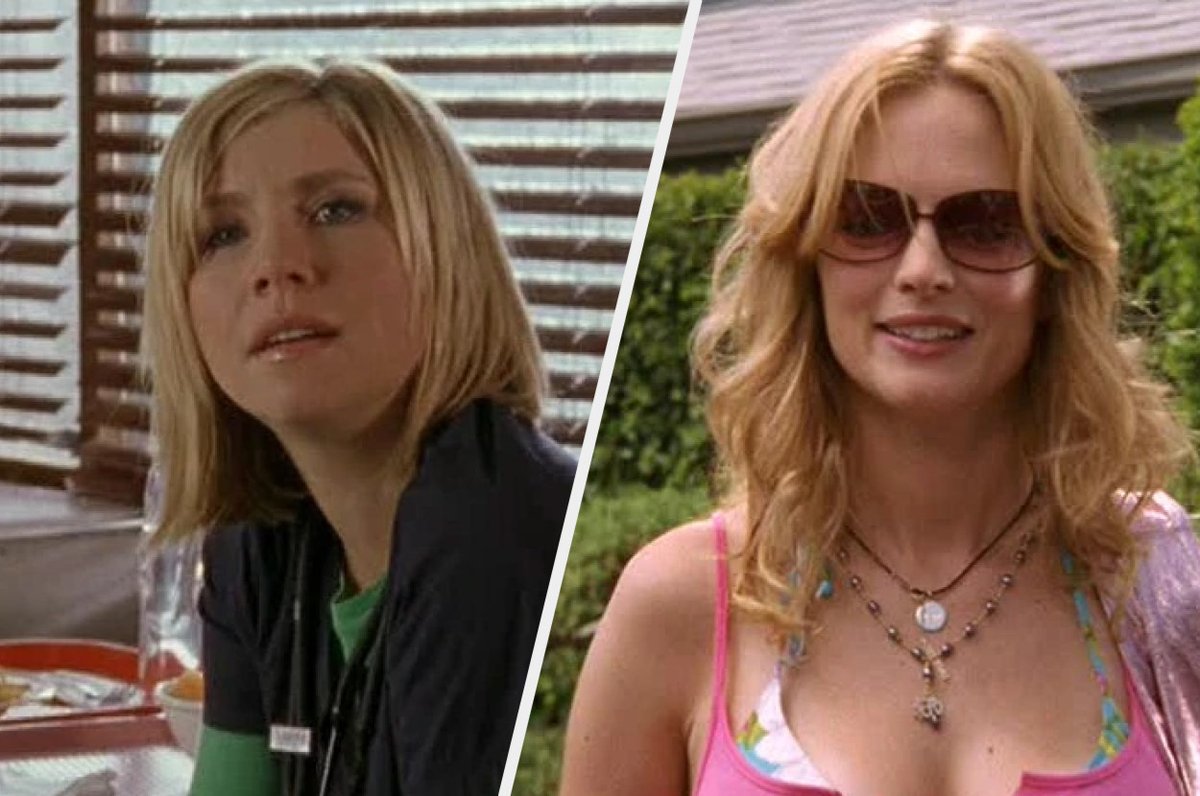
The fourth season of Scrubs hit its stride with "My Female Trouble" (S04E06), an episode that perfectly encapsulates the show's unique blend of heartfelt drama, rapid-fire jokes, and surrealist tangents. While you might recall J.D.'s struggles with Dr. Cox's new female protégé or Turk's questionable medical decisions, what you might not know are the countless hidden gems and production secrets that define not just this episode, but the entire series. Scrubs didn't just revolutionize the medical comedy genre; it created a world behind the cameras as rich and character-driven as the one on screen.
At a Glance: Diving Deep into Scrubs Production
- Real Hospital, Reel Life: Most of Scrubs, including S04E06, was filmed in a decommissioned hospital, giving the show an authentic, lived-in feel.
- Improv's Magic Touch: Key actors like John C. McGinley (Dr. Cox) and Neil Flynn (The Janitor) frequently ad-libbed, shaping their iconic characters.
- Friendship Fuels the Fire: The real-life bond between Zach Braff (J.D.) and Donald Faison (Turk) was central to their on-screen chemistry.
- Medical Accuracy Matters: Despite the comedy, the show employed medical consultants to ensure realistic portrayals of hospital life.
- Behind-the-Scenes Challenges: Filming in a non-functional hospital brought unique issues, from poor ventilation to unexpected character developments.
The Decommissioned Halls of Sacred Heart: Where Reality Met Comedy
Imagine stepping onto a set where every corner, every tiled floor, and every slightly scuffed door feels genuinely like a hospital. That's because it was. While the pilot episode of Scrubs took over a real, active hospital in Burbank, California, the vast majority of the show's nine-season run, including the production of episodes like S04E06, was filmed in the now-demolished North Hollywood Medical Center in Valley Village, California. This wasn't some purpose-built soundstage; this was an actual medical facility that had ceased operations in 1998.
This unique setting wasn't just a backdrop; it was practically another character. It housed everything: the sterile-looking hospital rooms, the surgical suites, even J.D.'s apartment and the writers' offices. This meant the cast and crew were constantly immersed in the world of Sacred Heart, allowing for a level of realism and seamless transition between locations that traditional studio sets often struggle to achieve.
However, filming in a decommissioned building wasn't without its quirks. The hospital, built in 1952, suffered from poor cooling and ventilation, especially in the basement areas where many scenes were shot. Actors, particularly during the hot Los Angeles summers, often found themselves sweating profusely. This very real discomfort, however, subtly contributed to the gritty, authentic atmosphere of the show, even if it meant a few extra takes to avoid a visible sheen of sweat on an actor's brow.
The North Hollywood Medical Center's legacy extended beyond Scrubs. Its authentic, somewhat eerie atmosphere made it a popular choice for other acclaimed series like The Office, Children's Hospital, The Sopranos, and Six Feet Under before its eventual demolition in 2011. It stands as a testament to how a physical space can profoundly influence the creative output of a production.
From Auditions to Ad-Libs: Crafting Iconic Characters
The brilliance of Scrubs lies not just in its writing but in its unforgettable ensemble cast, many of whom infused their characters with personal touches right from the start.
The Audition Journey: J.D. and Turk's Origin Story
Zach Braff, who immortalized John Dorian, had a surprisingly arduous journey to land the role. Then a waiter, he endured roughly six auditions, with his initial filmed New York audition reportedly being "underwhelming." It's hard to imagine anyone else as the whimsical, often insecure J.D., but it highlights the perseverance sometimes required to land that career-defining role. His best friend on and off-screen, Donald Faison (Dr. Christopher Turk), had a somewhat shorter audition process. Yet, even Faison almost didn't make the cut. Producer Bill Lawrence initially felt Faison "bombed" and almost dismissed him, only for a crucial piece of advice—"bring it down a little bit"—to unlock the Turk we know and love. This behind-the-scenes adjustment was pivotal in shaping Turk's more grounded, yet equally hilarious, demeanor.
Interestingly, both Sarah Chalke (Elliot Reid) and Zach Braff approached their Scrubs auditions with a unique blend of superstition and method acting. They each wore the same outfits and listened to the same songs for every single audition, with Braff even performing the exact same routine each time. Perhaps it worked, as they both became integral parts of the show's beating heart.
The Power of Improvisation: Shaping Dr. Cox and The Janitor
Much of Scrubs' comedic brilliance sprang from the organic creativity of its cast. John C. McGinley, as the sardonic Dr. Perry Cox, was a master of improvisation, significantly contributing to the character's signature mannerisms, blistering jokes, and unique introductions. His characteristic head scratch and the iconic catchphrase, "What do you say there, Bob?"—borrowed from his role as Sergeant O’Neill in the 1986 film Platoon—were all McGinley's additions, enriching Dr. Cox's complex personality.
Similarly, Neil Flynn, who played the enigmatic Janitor, was a king of ad-libbing. His scripts often contained the simple, liberating instruction: "Neil makes something up and then exits." This creative freedom allowed Flynn to craft one of television's most unique and beloved characters, whose unpredictable antics and bizarre non-sequiturs were a constant source of humor. The Janitor's origin story itself is a fascinating glimpse into the writers' process: he was initially conceived as a figment of J.D.'s imagination. This idea was wisely scrapped after the first season because, as Bill Lawrence noted, Flynn was simply "too funny to be imaginary or expendable." His true name, Glen Matthews, was only revealed in the series finale, maintaining his air of mystery for years.
More Than Laughs: The Heart and Humor of Scrubs
While "My Female Trouble" delivered plenty of laughs, the show always balanced its humor with genuine emotional depth and thoughtful insights into the medical profession. This balance was carefully cultivated from the writing room to the final cut.
Writing with a Personal Touch
The character of J.D. Dorian himself holds a personal connection to the show's creator, Bill Lawrence. J.D. was named after Lawrence's college friend, Jonathan Doris, a real medical student who initially struggled with his pre-med track. Doris later became a medical consultant for the show, providing Zach Braff with crucial insights into medical terminology and the realities of hospital life. He now works as a doctor in Los Angeles, even assisting with COVID-19 treatment, a poignant full-circle moment for the show's inspiration. This commitment to drawing from real experiences extended to employing several other medical professionals to ensure accuracy throughout the series.
Deliberate Quirks and Running Gags
One of the show's most enduring and, to some, infuriating quirks is the opening sequence where J.D. hangs an X-ray backward. Healthcare professionals often point this out as an error, but it was entirely deliberate—a small, subtle nod to the show's irreverent humor and J.D.'s own slightly chaotic nature.
Then there's Rowdy, J.D. and Turk's beloved golden retriever. While incredibly lifelike, Rowdy was, in fact, a taxidermied prop. Producer Bill Lawrence explained this choice logically: medical students simply wouldn't have the time to care for a real dog. Zach Braff, however, became so attached to the prop that he desperately wanted to keep Rowdy, but alas, it wasn't meant to be. This small detail underscores the show's ability to blend the absurd with grounded realities.
The Challenge of Nudity (Mostly Male)
The show's occasionally sexual nature was also a recurring theme, often recalled by Braff and Faison. Donald Faison humorously noted that most of the nudity in Scrubs scenes involved male characters, recalling one memorable instance where he had to wear a "sock around his member" during filming in a parking lot. These lighter, more risqué moments were part of the show's commitment to portraying the camaraderie and often crude humor that can develop in high-stress environments.
The Art of Performance: Beneath the Masks and Relationships
The performances in Scrubs were often lauded, and for good reason. The actors navigated complex emotional landscapes, challenging comedic timing, and even the literal masks of their profession.
Communicating Through Masks
Medical workers often praised Scrubs for its fairly realistic portrayal of hospital life, particularly for doctors wearing masks and, crucially, not removing them to speak. This seemingly small detail challenged actors like Faison and Braff to enhance their acting, learning to convey emotions, subtle reactions, and comedic beats solely through their eyes and body language. It's a testament to their skill that they managed to make masked interactions feel natural and expressive, a far cry from many medical dramas that prioritize facial visibility over realism.
Chemistry and Connection
The on-screen bond between J.D. and Turk was undeniably central to Scrubs' appeal, directly fueled by Zach Braff and Donald Faison's real-life friendship. This genuine connection translated into effortless chemistry, making their bromance one of the most beloved in television history.
The cast dynamics extended to other crucial relationships. Donald Faison often considered Judy Reyes (Carla, the "all-loving, long-suffering work-mom") and Ken Jenkins (Bob Kelso, the "likable villain") to have the most challenging roles. He felt they expertly navigated character nuances, from Carla's fierce loyalty and occasional exasperation to Kelso's complex blend of corporate villainy and surprising moments of humanity. Judy Reyes herself had a pre-kissing ritual with Faison: she'd often smoke cigarettes, a practice Faison joked was designed to challenge his acting skills!
Even minor characters left a lasting impression. Background actors like "Doctor Beardface," "Snoop Dogg Intern," and "Colonel Doctor" became beloved figures due to their memorable performances, earning nicknames from the cast and crew—a true mark of their integration into the Scrubs family.
Behind the Scenes of S04E06 and Beyond: Production's Evolving Landscape
While "My Female Trouble" was a mid-season entry in Scrubs' fourth year, it existed within a dynamic production environment that faced its own set of challenges and triumphs. For those looking to revisit these moments, you can always watch Scrubs S04E06 online and appreciate the layers of craftsmanship.
Navigating Success and Setbacks
Creator Bill Lawrence initially had modest expectations for Scrubs, not anticipating it to last more than a few episodes. Yet, by the end of its first season, the show had garnered nearly 12 million viewers and earned two Emmy nominations, a clear sign of its burgeoning popularity.
However, the show's journey wasn't without its bumps. There was a several-month wait between the pilot and regular filming. During this hiatus, Zach Braff quit his restaurant job and, notably, wrote the script for "Garden State." This independent film went on to become a significant hit, boosting Braff's fame but ironically coinciding with a subsequent dip in Scrubs viewership, as NBC's inconsistent scheduling started to impact the show's audience. Viewership declined significantly from 10.4 million in season three to 6 million by season four—the very season "My Female Trouble" aired—largely due to these scheduling woes.
The show faced further turmoil with the Writers Guild Strike and a network switch from NBC to ABC, which unfortunately led to executive decisions to cut actors Masi Oka and Sarah Lancaster from the cast. The final season of Scrubs marked another significant production change, moving from the beloved North Hollywood Medical Center to a backlot movie studio. This shift, which altered the show's aesthetic, displeased many long-time fans who missed the authentic hospital environment.
A Poignant Loss
The Scrubs family also experienced a profound loss during its run. John Ritter, who played J.D.'s endearing father, Sam Dorian, in two episodes, tragically passed away on September 11, 2003, from an undiagnosed aortic dissection. His death deeply affected the cast and crew, leading to a special episode, "My Cake," which beautifully honored his memory. These moments of real-life sorrow inevitably ripple through a production, adding another layer of depth and sincerity to the on-screen performances.
Love on Set
Not all behind-the-scenes stories are about challenges; some are about serendipity. The stunt doubles for J.D. (Zach Braff) and Elliot (Sarah Chalke) in a memorable season two bungee jumping scene met on set, fell in love, and eventually married and had children. It's a sweet reminder that even in the chaos of television production, personal connections and new beginnings can flourish.
The Enduring Legacy: More Than Just a Sitcom
"My Female Trouble" and the entire run of Scrubs transcended typical sitcom tropes. It was a show that wasn't afraid to be silly, profound, and painfully real, often all within the same minute. From the deliberate choice to film in a decommissioned hospital that imbued every scene with authentic atmosphere to the creative freedom given to its cast for improvisation, Scrubs was a masterclass in thoughtful production. The genuine camaraderie among the actors, their commitment to medical accuracy, and their ability to convey emotion through even the simplest of gestures (like communicating behind masks) all contributed to a series that resonated deeply with viewers and critics alike.
As you reflect on the quirky charm of Sacred Heart, remember that every chuckle, every tear, and every internal monologue was built upon a foundation of meticulous planning, creative freedom, and a passionate team dedicated to bringing this unique world to life. It’s a testament to the show’s enduring quality that these behind-the-scenes stories continue to fascinate and entertain years after its final episode aired. The show's ability to blend high stakes with high hilarity remains its most compelling secret, making it a timeless favorite for old fans and new viewers discovering its magic for the first time.